
Introduction
Launching a website used to be the finish line but now, it is merely the starting block. Today, your “Online Presence Score” isn’t a static number found in a single dashboard; it is a living ecosystem of visibility, technical health, and brand reputation across traditional search engines, social platforms, and most importantly, Artificial Intelligence models.
By tracking these key areas, you can spot what’s working, fix invisible technical leaks, and make smart choices to grow your business. This guide breaks down the complex world of 2026 digital marketing into six actionable steps.
Key Takeaways
-
Optimize for Generative Engine Optimization (GEO) to ensure AI models like ChatGPT cite your brand as a source.
-
Maintain a healthy Engagement Rate above 50% to prove your content provides real value to visitors.
-
Master Core Web Vitals by ensuring your site loads in under 2.5 seconds and responds instantly to clicks.
-
Track “Dark Social” via UTM links and manage brand sentiment by replying to every online review.
Track Website Traffic & Engagement (The GA4 Way)
Raw traffic (hits) is a vanity metric. In 2026, the focus has shifted entirely to Engaged Sessions. With the rise of “Zero-Click Searches,” where Google or AI gives the answer on the result page, the people who actually click through to your site are your most valuable leads.
- The New Gold Standard: Sign up for Google Analytics (GA4) at google.com.
- Engagement Rate: This measures the percentage of visitors who stayed longer than 10 seconds, viewed more than one page, or performed a “conversion action” (like clicking a button). Aim for >50%.
- Traffic Quality: Look at your “Average Engagement Time.” If a user leaves in under 5 seconds, your content isn’t answering their question.
Expert Tip: Link your site to Google Search Console. It is the only way to see the “Impressions” you get, meaning how many times you appeared in a search even if no one clicked. This is crucial for brand awareness.
Monitor AI & SEO Visibility (GEO is the New SEO)
Traditional SEO is evolving into Generative Engine Optimization (GEO). People now ask ChatGPT, Claude, and Gemini for recommendations. If these AI models don’t know you exist, you are missing out on the fastest-growing traffic source of the decade.
- AI Citations: Use tools like Ahrefs Brand Radar or LLM Pulse to see if AI models are “citing” your website as a source. AI citations are the “backlinks” of 2026.
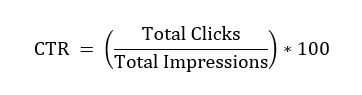
- The CTR Calculation: As AI Overviews dominate the top of search results, your Click-Through Rate (CTR) is the best way to see if your headlines are compelling enough to pull users away from the AI summary and onto your page.
Formula:
Master Technical Performance (Core Web Vitals)
Google’s 2026 ranking algorithm prioritizes “user delight.” If your site feels sluggish or jumpy, your presence score will tank. You must monitor the three Core Web Vitals:
- LCP (Largest Contentful Paint): How fast does your main image or text load? Goal: < 2.5 seconds.
-
-
- Fix: Use WebP image formats and fast SSD hosting.
-
- INP (Interaction to Next Paint): This replaced “First Input Delay.” It measures the lag between a user clicking a button and the site actually responding. Goal: < 200ms.
-
-
- Fix: Reduce heavy “render-blocking” JavaScript.
-
- CLS (Cumulative Layout Shift): Does your text move around while an ad loads? This frustrates users. Goal: < 0.1.
-
-
- Fix: Always set width and height attributes for images and ad slots.
-
Decode “Dark Social” & Engagement
Social media is no longer just about public “Likes.” In 2026, most sharing happens via Dark Social – private messages on WhatsApp, Slack, and Discord. Because these links don’t have “referral data,” they often show up in your analytics as “Direct Traffic,” making it look like people just typed your URL in.
- UTM Tracking: To shine a light on Dark Social, never share a raw link. Use a UTM Link (e.g., yoursite.com/?utm_source=whatsapp). This tells your analytics exactly where the click came from.
- Social Engagement Rate: High engagement signals to AI crawlers that your brand is an “authority.”
Formula:

Further Reading: Understanding how your content spreads in private is key to modern growth. Read Top Social Media Strategies for Boosting Website Traffic for more.
Monitor Brand Sentiment (Your Digital Vibe)
Your Online Presence Score is heavily influenced by Sentiment. AI models “read” reviews and forum discussions to decide if you are a “Recommended” or “Avoid” brand.
- Net Sentiment Score (NSS): This is a simple way to track your reputation.
- Formula: % Positive Mentions – % Negative Mentions = Net Sentiment
- Example: If 60% of reviews are positive and 10% are negative, your score is +50.
- Reputation Management: Claim your profiles on Google Business, Yelp, and Trustpilot. Reply to every review. A polite response to a 1-star review can actually increase your trust score with AI crawlers, as it shows active customer service.
Set and Track Specific “SMART” Goals
Data is useless without a target. To improve your score, you must set SMART goals:
- Specific: “Increase AI citations for our ‘Organic Dog Food’ page.”
- Measurable: “Reach a 3% CTR in Google Search Console.”
- Achievable: Don’t aim for 1 million hits in a week if you have 100 now.
- Relevant: Does this traffic actually lead to sales?
- Time-bound: “Achieve these numbers by the end of Q3.”
Final Thoughts: The “Health Check” Habit
Measuring your online presence is like checking your business’s pulse. In 2026, the websites that win are the ones that are fast (Core Web Vitals), cited (AI/GEO), and trusted (Sentiment).
Don’t try to fix everything at once. Start by setting up your Google Analytics and Search Console this week. Next week, focus on your site speed. By the end of the month, you’ll have a clear, data-backed roadmap to a dominating online presence.