

Introduction
Running an ecommerce business in Uganda is exciting since you don’t need to struggle with rent fee, but competition is becoming tough.
Customers today have endless options, so how you handle customer service and support can make or break your business.
Research shows that 86% of customers stop buying after just two bad experiences, while businesses with excellent service retain almost three times more customers than those with poor support.
Good customer service is more than just answering questions. It’s about building trust, solving problems quickly, and creating experiences that keep customers coming back.
In this guide, we’ll cover practical and affordable strategies you can apply today, even if you’re running your shop alone or with a small team and a limited budget.
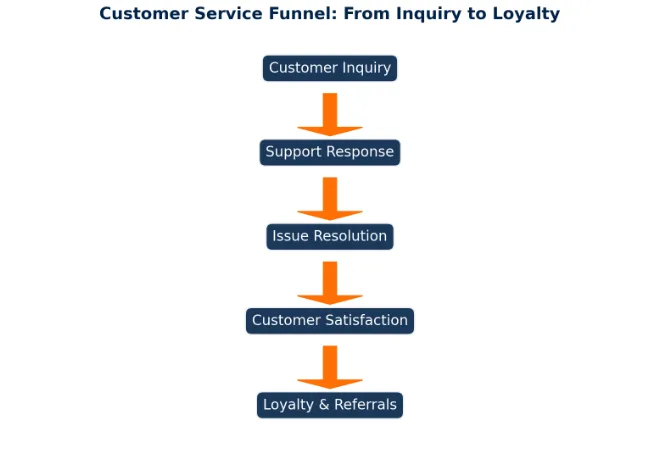
How to Handle Customer Service and Support
- Make It Easy for Customers to Reach You
- Respond Quickly and Professionally
- Personalize Every Interaction
- Provide Clear and Simple Answers
- Handle Complaints Proactively
- Collect and Use Customer Feedback
- Train Yourself and Your Team
Make It Easy for Customers to Reach You
Accessibility is the foundation of great service. Customers shouldn’t have to struggle to contact you. Offer multiple ways for them to reach you, such as:
- Email and WhatsApp (affordable and popular in Uganda).
- Live chat on your website (try free tools like Tidio or Freshchat).
- Social media (Facebook, Instagram, X).
Display your contact details clearly on your website and social pages, including business hours and how long customers should expect to wait for a response.
Challenge for small businesses: Advanced tools like Zendesk may be expensive. Start with free or low-cost platforms and upgrade as your business grows.
Respond Quickly and Professionally
Speed is everything. Studies show 79% of customers expect a response within 24 hours, but the faster, the better.
Example: If a customer emails you about a delayed delivery, reply like this:
“Hi Naki, I’m sorry for the delay. Your order is on the way, and here’s your tracking number.”
Even if you don’t have an immediate solution, acknowledge their message with an automated reply like:
“We’ve received your request and will get back to you shortly.”
Tip: Track metrics like average response time to keep yourself accountable.
Personalize Every Interaction
Nobody likes robotic, copy-paste replies. Make your customers feel valued by:
- Using their names.
- Referring to their order history.
- Tailoring your response to their specific issue.
Instead of: “Thank you for your inquiry,”
Say: “Hi Ojok, thanks for reaching out about your wireless headphones order. Let’s get the setup sorted for you.”
Tools like HubSpot CRM (free plan) can help you organize customer information so you can personalize at scale.
Trend: AI-powered personalization is growing, but even a small touch like remembering a repeat customer’s last purchase goes a long way.
Provide Clear and Simple Answers
Confusing answers frustrate customers. Keep your communication clear, simple, and jargon-free.
Instead of: “The API endpoint failed,”
Say: “The payment system had a temporary issue, but it’s fixed now.”
Consider using:
- FAQs with screenshots.
- Short how-to videos for complex setups.
Challenge: Balancing detail with simplicity. Test your responses with friends or colleagues. If they understand, your customers will too.
Handle Complaints Proactively
Complaints are inevitable, but they’re also opportunities to win loyalty.
For example: If a customer receives a damaged product, don’t wait for them to get angry. Reply with empathy and a solution:
“I’m so sorry, Emma, that your order arrived damaged. We’ll send a replacement today at no extra cost.”
Then, follow up later to confirm they’re satisfied. Research shows 70% of customers who get their complaints resolved stay loyal.
Use social listening tools (like Hootsuite or even manual monitoring of your Facebook inbox) to spot issues early before they escalate.
Collect and Use Customer Feedback
Feedback is free business advice, don’t waste it. Encourage reviews after purchases, and use surveys to learn where you can improve.
Practical options:
- Google Forms for free surveys.
- NPS (Net Promoter Score) to measure loyalty.
Example response to feedback:
“Thanks for your review, Mark. We’re already working to improve checkout speed based on your suggestion.”
Trend: Monitor conversations about your brand on platforms like X to understand customer sentiment.
Train Yourself and Your Team
Even if you’re running solo today, you may grow into a team tomorrow. Training ensures consistency in how customers are treated.
- Role-play common situations (angry customers, delayed deliveries).
- Learn best practices from free resources (Coursera, YouTube, or blogs).
- Celebrate great customer interactions, this motivates staff and builds culture.
Challenge: Training takes time. Start small with focused sessions (e.g., “How to respond to delivery issues”) and expand over time.
Conclusion: Small Steps, Big Impact
Exceptional customer service isn’t about having the biggest team or the most expensive tools. It’s about being accessible, fast, personal, clear, and empathetic.
Here’s how to get started today:
- Pick one new channel (like WhatsApp) to make your business more accessible.
- Commit to responding to all messages within 24 hours.
- Personalize every customer interaction.
Track simple metrics like response time and CSAT (Customer Satisfaction Score) to see your progress.
Remember, in ecommerce, great customer service is your best marketing tool. Happy customers don’t just come back, they also bring their friends too.